

In the realm of floral arrangements, the choice of adhesive is a critical decision that can significantly impact the outcome of the design. Among the various types of adhesives available, the transparent hot glue stick has emerged as a popular option for many florists and DIY enthusiasts. As a supplier of Transparent Hot Melt Glue Stick, I am often asked whether these glue sticks are suitable for floral arrangements. In this blog post, I will delve into the properties of transparent hot glue sticks, their advantages and disadvantages for floral work, and provide practical tips on how to use them effectively.
Properties of Transparent Hot Glue Sticks
Transparent hot glue sticks are typically made from ethylene-vinyl acetate (EVA) copolymers, which are thermoplastic materials that melt when heated and solidify when cooled. These glue sticks offer several unique properties that make them appealing for floral arrangements:
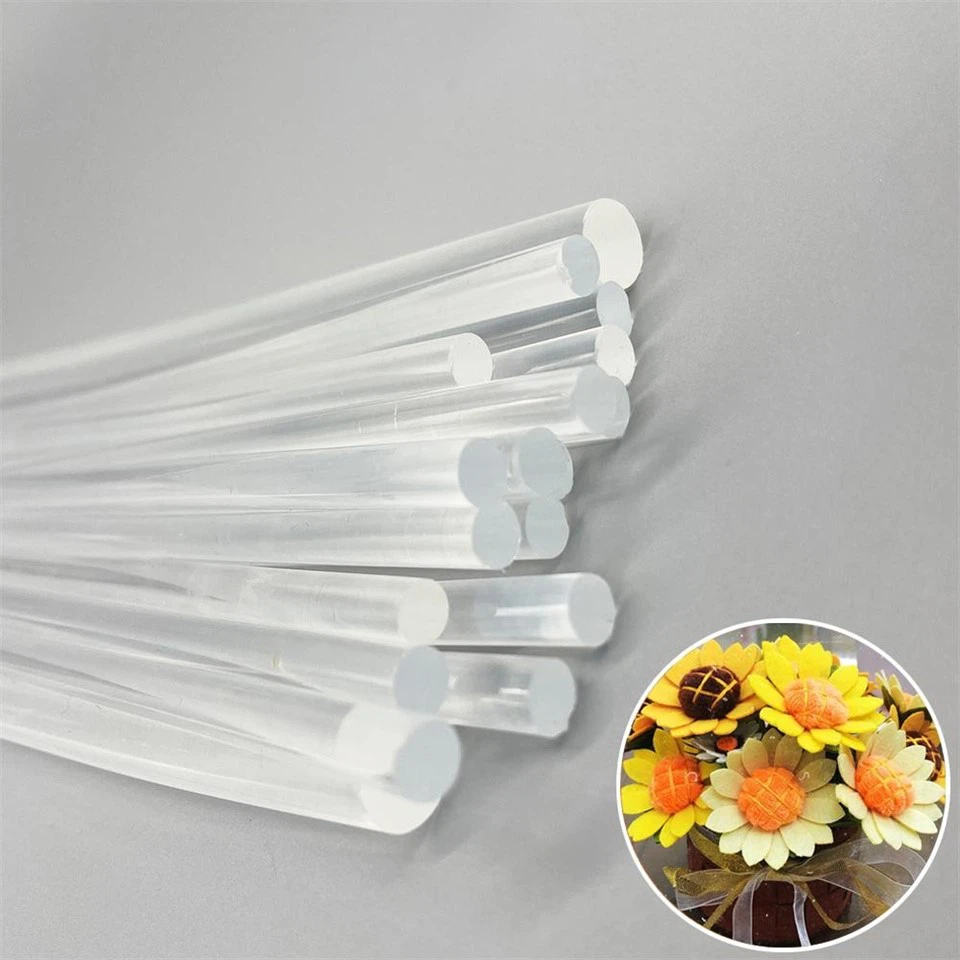
- Transparency: As the name suggests, transparent hot glue sticks are clear when melted, allowing for a discreet bonding solution that does not detract from the beauty of the flowers. This is particularly important for delicate or high - end floral designs where the adhesive should be as invisible as possible.
- Quick Setting Time: Hot glue sets rapidly, usually within a few seconds to a minute, depending on the ambient temperature and the type of materials being bonded. This fast - setting property enables florists to work efficiently and complete their arrangements in a timely manner.
- Strong Bonding: Once cooled, hot glue forms a strong bond with a variety of materials commonly used in floral arrangements, including flowers, leaves, stems, and decorative elements such as ribbons and beads.
Advantages of Using Transparent Hot Glue Sticks in Floral Arrangements
- Versatility: Transparent hot glue sticks can be used to bond different types of flowers and foliage, regardless of their texture or shape. Whether you are working with smooth petals, rough stems, or delicate leaves, the glue can create a secure attachment.
- Ease of Use: Using a hot glue gun with a transparent hot glue stick is relatively straightforward. You simply insert the glue stick into the gun, wait for it to heat up, and then apply the glue to the desired surface. This simplicity makes it accessible for both professional florists and beginners.
- Customization: The ability to control the amount and placement of the glue allows for precise customization of the floral arrangement. You can create intricate designs by carefully applying the glue to specific areas, adding decorative elements, or fixing loose parts.
Disadvantages of Using Transparent Hot Glue Sticks in Floral Arrangements
- Heat Sensitivity: Flowers are living organisms, and excessive heat can damage them. When using a hot glue gun, the high temperature of the melted glue can cause the petals or stems to wilt or discolor. This is especially true for delicate flowers such as orchids or tulips.
- Limited Flexibility: Once the hot glue has cooled and hardened, it becomes rigid. This lack of flexibility can be a problem for floral arrangements that need to bend or move, as the glue may crack or break under stress.
- Temporary Bonding: While hot glue forms a strong bond initially, it may not be suitable for long - term floral displays. Over time, the glue may lose its adhesion due to factors such as temperature changes, humidity, or the natural decay of the flowers.
Practical Tips for Using Transparent Hot Glue Sticks in Floral Arrangements
- Test on a Small Area: Before applying the glue to the entire arrangement, it is advisable to test it on a small, inconspicuous part of the flower or foliage. This will help you determine if the heat or the glue itself will cause any damage.
- Use Low - Temperature Glue Guns: To minimize the risk of heat damage to the flowers, consider using a low - temperature hot glue gun. These guns operate at a lower temperature, reducing the chances of wilting or discoloration.
- Apply the Glue Sparingly: Using too much glue can make the arrangement look messy and may also increase the risk of heat damage. Apply a thin, even layer of glue to the surface to be bonded.
- Support the Flowers: If you are using hot glue to attach heavy or large flowers, provide additional support such as wires or floral tape to prevent the glue from bearing the entire weight.
Comparing with Other Adhesives
In addition to transparent hot glue sticks, there are other adhesives commonly used in floral arrangements, such as Silicone Bar and Glue Stick For Bonding Purpose. Each adhesive has its own set of advantages and disadvantages:
- Silicone Bar: Silicone adhesives are known for their flexibility and resistance to temperature and humidity changes. They are ideal for long - term floral displays and can be used in outdoor settings. However, silicone adhesives may take longer to set compared to hot glue, and they can be more expensive.
- Glue Stick For Bonding Purpose: These glue sticks are designed for general bonding applications and may not offer the same level of transparency or heat - sensitivity control as transparent hot glue sticks. They are better suited for bonding non - floral materials or for less delicate floral arrangements.
Conclusion
In conclusion, transparent hot glue sticks can be a valuable tool for floral arrangements, offering transparency, quick setting time, and strong bonding. However, they also have some limitations, such as heat sensitivity and limited flexibility. By understanding the properties of transparent hot glue sticks and following the practical tips provided, florists can use them effectively to create beautiful and long - lasting floral designs.

If you are interested in purchasing high - quality transparent hot glue sticks for your floral arrangements, please feel free to contact us. We are committed to providing you with the best products and services to meet your needs.
References
- Smith, J. (2018). Floral Design Basics. Flower Press.
- Johnson, A. (2020). Adhesives in Floral Arts. Craft Journal.