

When it comes to heavy - duty projects, one question that often arises is whether a glue stick for a hot glue gun is strong enough. As a supplier of glue sticks for hot glue guns, I've encountered this query numerous times from both DIY enthusiasts and professional contractors. In this blog post, I'll delve into the factors that determine the strength of hot glue sticks and whether they can hold up under the demands of heavy - duty applications.

Understanding the Composition of Hot Glue Sticks
Hot glue sticks are typically made from ethylene - vinyl acetate (EVA) copolymers. EVA is a thermoplastic polymer that has excellent adhesive properties when melted. Different formulations of EVA can result in glue sticks with varying levels of strength, flexibility, and heat resistance.
The strength of a hot glue stick is determined by several factors related to its composition. The molecular weight of the EVA resin plays a crucial role. Higher molecular weight EVA resins generally result in stronger bonds because they have more entanglement between the polymer chains. Additionally, the amount of additives such as tackifiers, plasticizers, and antioxidants can also affect the strength and performance of the glue.
Tackifiers are substances that increase the stickiness of the glue, allowing it to adhere quickly to the surfaces. Plasticizers, on the other hand, improve the flexibility of the cured glue, which can be beneficial in applications where the bonded parts may experience some movement. Antioxidants help to prevent the glue from degrading over time due to exposure to oxygen and heat.
Evaluating Strength for Heavy - Duty Projects
Heavy - duty projects usually involve bonding large or heavy objects, or objects that will be subjected to significant stress, vibration, or temperature changes. To determine if a hot glue stick is strong enough for such projects, we need to consider the following aspects:
Shear Strength
Shear strength refers to the ability of the glue to resist forces that act parallel to the bonded surfaces. In heavy - duty applications, such as attaching wooden beams or metal brackets, high shear strength is essential. Some industrial - grade glue sticks are formulated to have excellent shear strength. For example, our Industrial Glue Sticks are designed with a high - molecular - weight EVA resin and carefully selected additives to provide strong shear resistance. These glue sticks can hold heavy objects firmly in place, making them suitable for construction and manufacturing projects.
Tensile Strength
Tensile strength measures the ability of the glue to withstand forces that pull the bonded surfaces apart. In projects where the bonded parts will be under tension, like hanging a heavy picture frame or securing a cable, good tensile strength is required. Our Yellow Hot Glue Sticks have been tested to have reliable tensile strength. They form a strong bond that can resist the pulling forces, ensuring the stability of the bonded objects.
Temperature Resistance
Temperature changes can significantly affect the strength of hot glue. In heavy - duty projects, especially those exposed to extreme temperatures, the glue needs to maintain its integrity. Some glue sticks are formulated to have high - temperature resistance, which means they can withstand heat without softening or losing their bonding strength. On the other hand, low - temperature - resistant glue sticks can remain flexible and strong in cold environments. When choosing a glue stick for a heavy - duty project, it's important to consider the temperature conditions the bonded parts will be exposed to.
Case Studies: Hot Glue Sticks in Heavy - Duty Applications
Let's look at some real - world examples to illustrate the effectiveness of hot glue sticks in heavy - duty projects.
Construction
In the construction industry, hot glue sticks are often used for small - scale bonding tasks. For instance, when installing decorative moldings on walls or ceilings, hot glue can provide a quick and reliable bond. Our industrial - grade glue sticks have been used in construction projects to bond lightweight insulation materials to metal frames. The high shear strength of the glue ensures that the insulation stays in place, even when subjected to air pressure changes.
Manufacturing
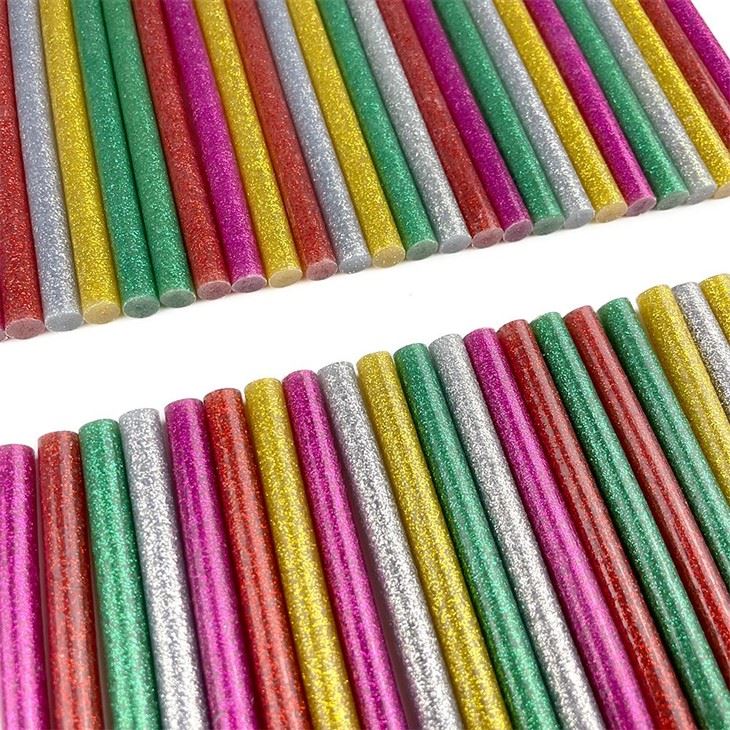
Manufacturers also rely on hot glue sticks for various assembly processes. In the production of furniture, hot glue can be used to attach small components such as handles, hinges, and decorative elements. Our Glitter Hot Melt Glue Stick not only provides a strong bond but also adds an aesthetic touch to the product. In the electronics industry, hot glue is used to secure wires and components inside electronic devices. The glue's ability to cure quickly and provide a stable bond makes it a popular choice for high - volume manufacturing.
Limitations of Hot Glue Sticks for Heavy - Duty Projects
While hot glue sticks can be effective in many heavy - duty applications, they do have some limitations.
Bonding to Certain Materials
Hot glue may not bond well to some smooth or non - porous materials such as glass, plastic, or metal with a highly polished surface. In these cases, surface preparation is crucial. Sanding, cleaning, or using a primer can improve the adhesion of the glue. However, even with proper surface preparation, the bond strength may still be lower compared to other types of adhesives.
Long - Term Durability
Over time, hot glue can degrade due to exposure to sunlight, moisture, and chemicals. In outdoor applications or environments with harsh conditions, the bond strength of hot glue may decrease over months or years. For projects that require long - term durability, other types of adhesives such as epoxy or polyurethane may be more suitable.
Conclusion
In conclusion, whether a glue stick for a hot glue gun is strong enough for heavy - duty projects depends on several factors, including the type of project, the materials being bonded, and the environmental conditions. Our range of glue sticks, including Yellow Hot Glue Sticks, Industrial Glue Sticks, and Glitter Hot Melt Glue Stick, are designed to meet different requirements and offer reliable performance in many heavy - duty applications.
If you're considering using hot glue sticks for your heavy - duty projects and have questions about which product is right for you, or if you're interested in placing an order, please don't hesitate to contact us. We're here to provide you with professional advice and high - quality glue sticks to ensure the success of your projects.
References
- "Handbook of Adhesives and Sealants" by Andrew Pizzi and K. L. Mittal
- "Adhesion Science and Engineering: Surfaces, Chemistry, and Applications" by K. L. Mittal