

In the realm of woodworking, the choice of adhesive can significantly impact the outcome of a project. Hot melt glue has emerged as a versatile and reliable option for woodworkers, offering a range of benefits that make it an attractive choice. As a supplier of Hot Melt Glue for Woodworking, I have witnessed firsthand the transformative power of this adhesive in various woodworking applications. In this blog post, I will explore the flexibility of hot melt glue for woodworking, discussing its properties, advantages, and applications.
Understanding Hot Melt Glue
Hot melt glue, also known as hot melt adhesive, is a thermoplastic adhesive that is solid at room temperature. When heated, it becomes a liquid that can be applied to surfaces. Once cooled, it solidifies and forms a strong bond. Hot melt glue is typically made from a combination of polymers, resins, and additives, which determine its properties and performance.
One of the key advantages of hot melt glue is its fast setting time. Unlike traditional adhesives that require hours or even days to dry, hot melt glue can set in a matter of seconds or minutes, depending on the formulation and application conditions. This allows woodworkers to complete their projects more quickly and efficiently, reducing production time and increasing productivity.
Another advantage of hot melt glue is its versatility. It can be used to bond a wide variety of materials, including wood, wood composites, plastics, metals, and fabrics. This makes it a popular choice for woodworking applications, where different materials may need to be joined together. Additionally, hot melt glue can be applied in a variety of ways, including extrusion, spraying, and rolling, making it suitable for different types of woodworking projects.
Flexibility of Hot Melt Glue for Woodworking
The flexibility of hot melt glue for woodworking refers to its ability to adapt to different woodworking applications and requirements. This flexibility is due to several factors, including its chemical composition, physical properties, and application methods.
Chemical Composition
The chemical composition of hot melt glue plays a crucial role in determining its flexibility. Different polymers and resins can be used to create hot melt glue formulations with different properties, such as flexibility, strength, and adhesion. For example, ethylene-vinyl acetate (EVA) is a commonly used polymer in hot melt glue formulations for woodworking. EVA-based hot melt glues offer excellent flexibility, adhesion, and low temperature resistance, making them suitable for a wide range of woodworking applications.
Physical Properties
The physical properties of hot melt glue, such as viscosity, melting point, and open time, also contribute to its flexibility. Viscosity refers to the thickness or flowability of the hot melt glue. A lower viscosity hot melt glue is more fluid and easier to apply, while a higher viscosity hot melt glue is thicker and more suitable for applications where a stronger bond is required. The melting point of hot melt glue determines the temperature at which it becomes a liquid. Different woodworking applications may require hot melt glues with different melting points to ensure proper adhesion and bonding. Open time refers to the amount of time between the application of the hot melt glue and the time it sets. A longer open time allows woodworkers more time to position and adjust the materials being bonded, while a shorter open time is suitable for applications where a fast setting time is required.
Application Methods
The application methods of hot melt glue also offer flexibility for woodworking applications. Hot melt glue can be applied using a variety of tools, including hot melt glue guns, extruders, and sprayers. Each application method has its own advantages and disadvantages, and the choice of application method depends on the specific woodworking project and requirements. For example, hot melt glue guns are a popular choice for small-scale woodworking projects, as they are easy to use and allow for precise application. Extruders are suitable for larger-scale woodworking projects, as they can apply hot melt glue in a continuous stream, covering a larger area more quickly. Sprayers are ideal for applications where a thin, even layer of hot melt glue is required, such as edge banding.
Applications of Hot Melt Glue in Woodworking
The flexibility of hot melt glue makes it suitable for a wide range of woodworking applications. Some of the common applications of hot melt glue in woodworking include:
Edge Banding
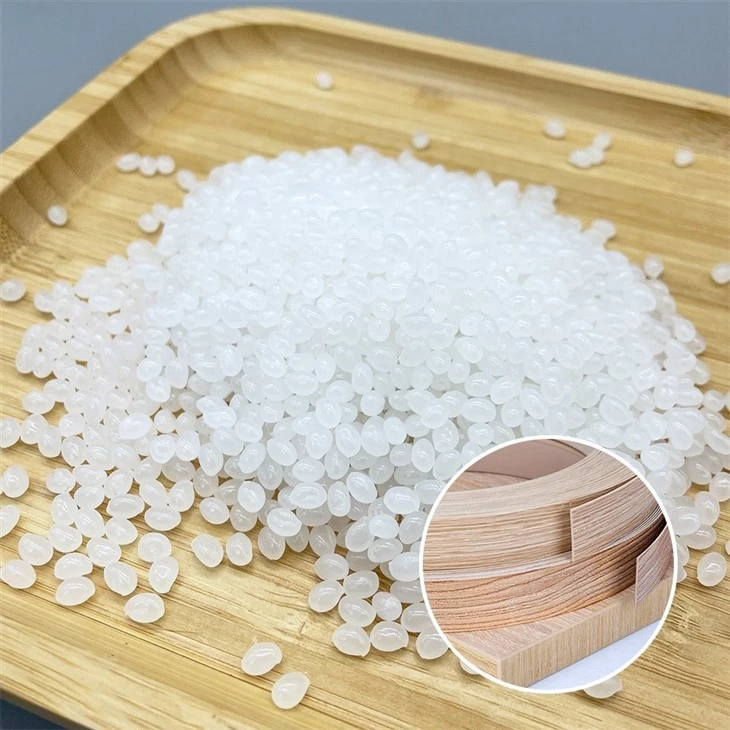
Edge banding is a process of covering the exposed edges of wood panels with a thin strip of material, such as wood veneer, plastic, or metal. Hot melt glue is commonly used for edge banding, as it provides a strong and durable bond between the edge banding material and the wood panel. The fast setting time of hot melt glue allows for efficient production, and the flexibility of the glue ensures that it can conform to the shape of the edge banding material. Glue For Edge Banding
Furniture Assembly
Hot melt glue is widely used in furniture assembly, where it is used to bond different parts of the furniture together, such as joints, frames, and panels. The fast setting time of hot melt glue allows for quick assembly, and the strong bond ensures the durability of the furniture. Additionally, the flexibility of the glue allows for some movement and adjustment of the parts during assembly, reducing the risk of cracking or breaking.
Cabinet Making
In cabinet making, hot melt glue is used for various applications, including bonding cabinet doors, drawers, and shelves. The flexibility of the glue allows it to withstand the stresses and strains of daily use, ensuring the longevity of the cabinets. The fast setting time also enables efficient production, reducing the time required to complete each cabinet.
Woodworking Crafts
Hot melt glue is a popular choice for woodworking crafts, such as making wooden toys, decorative items, and picture frames. The ease of use and fast setting time of hot melt glue make it suitable for hobbyists and DIY enthusiasts. The flexibility of the glue allows for creative and intricate designs, as it can bond different materials and shapes together.
Advantages of Using Hot Melt Glue in Woodworking
In addition to its flexibility, hot melt glue offers several other advantages for woodworking applications:

Strong Bonding
Hot melt glue provides a strong and durable bond between wood and other materials. The bond strength is often comparable to or even stronger than traditional adhesives, ensuring the stability and longevity of the woodworking project.
Clean and Neat Application
Hot melt glue is easy to apply and does not require any mixing or measuring. It can be applied precisely, resulting in a clean and neat appearance. This is particularly important for woodworking projects where aesthetics are important.
Resistance to Environmental Factors
Hot melt glue is resistant to moisture, heat, and chemicals, making it suitable for use in different environments. This ensures that the bond remains strong and intact even under challenging conditions.
Cost-Effective
Hot melt glue is generally more cost-effective than traditional adhesives, as it requires less time and labor to apply. The fast setting time also reduces production time, resulting in cost savings for woodworkers.
Considerations When Using Hot Melt Glue in Woodworking
While hot melt glue offers many advantages for woodworking, there are some considerations to keep in mind:
Temperature Requirements
Hot melt glue requires a specific temperature range for proper application and bonding. It is important to use the correct temperature settings on the hot melt glue gun or equipment to ensure optimal performance.
Surface Preparation
Proper surface preparation is essential for achieving a strong bond with hot melt glue. The surfaces to be bonded should be clean, dry, and free of any dust, grease, or debris.
Storage
Hot melt glue should be stored in a cool, dry place to prevent it from melting or degrading. It is also important to follow the manufacturer's instructions for storage and handling.
Conclusion
The flexibility of hot melt glue makes it an excellent choice for woodworking applications. Its ability to adapt to different materials, applications, and requirements, combined with its fast setting time, strong bonding, and other advantages, make it a popular adhesive among woodworkers. Whether you are a professional woodworker or a DIY enthusiast, Woodworking Hot Melt Glue or Hot Melt Adhesive For Woodworking can help you achieve high-quality and durable woodworking projects.
If you are interested in purchasing hot melt glue for your woodworking projects, we invite you to contact us for more information and to discuss your specific requirements. Our team of experts is ready to assist you in finding the right hot melt glue solution for your needs.
References
- ASTM International. (2023). Standard Terminology for Adhesives. ASTM D907 - 16.
- Lee, L. H., & Neville, A. (1991). Adhesion and Adhesives: Science and Technology. Elsevier.
- Pizzi, A., & Mittal, K. L. (Eds.). (2003). Handbook of Adhesives and Sealants. Marcel Dekker.